
Central Germany Forest Fire Initiative
When there's a forest fire, every second counts – and so does having the right know-how.
The Central German Forest Fire Initiative (IWM) is your partner for professional training and further education in vegetation fire fighting. We bring firefighters, foresters, and decision-makers together. Whether in the ministry, on private forest land, or directly at the fire front: We optimally prepare emergency personnel, forest owners, and authorities for emergencies through specialized theoretical and practical modules.

About Us
The Central German Forest Fire Initiative (IWM) is your expert partner for fighting forest and vegetation fires. Since January 2024, we have offered customized training programs for volunteer and professional fire departments, encompassing both theory and practice. IWM also provides expert advice during vegetation fire incidents, including weather assessments and tactical fire forecasts. Stay informed about the latest developments and tips on forest fire fighting by subscribing to our newsletter.


Why even bother with training in vegetation fire fighting?
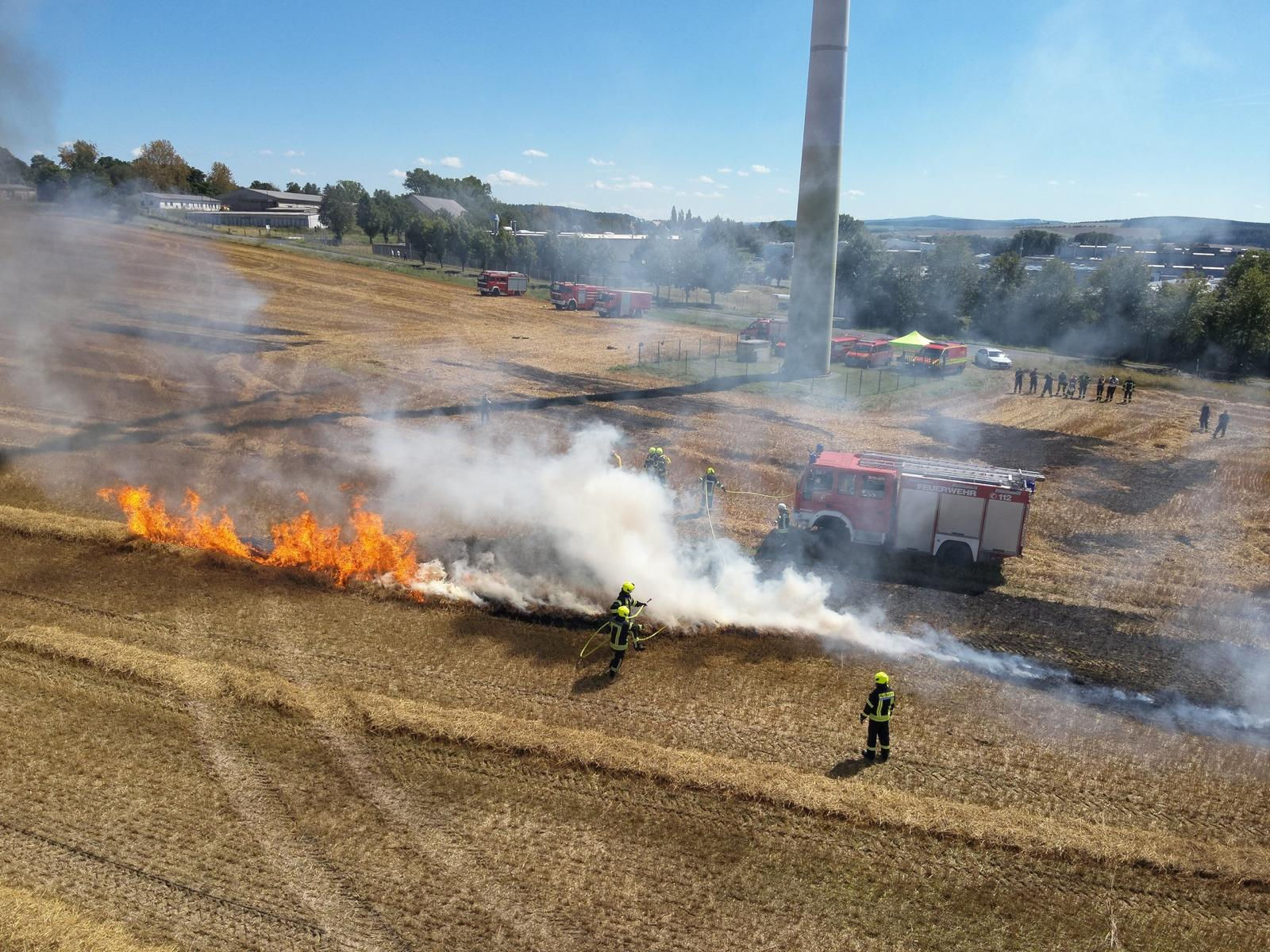
The Necessity of Training in Vegetation Firefighting: The landscape of firefighting in Germany is changing. The past few years have made it unequivocally clear: vegetation fires are an increasingly relevant and serious issue in Germany. What were once considered "summer problems" in the south or on distant continents have now arrived in our own backyard due to climate change and prolonged periods of drought. 🔥 Challenges Requiring a Rethink This year's devastating forest fire in Gösselsdorf (Thuringia) serves as a stark and cautionary example of this new reality. Such scenarios present fire departments in Germany with growing and complex challenges. The reasons for this are multifaceted and necessitate an urgent rethink in training and equipment: Extensive, Widespread Incidents: Vegetation fires often spread across vast, inaccessible areas. The sheer size of the affected areas quickly overwhelms local emergency response structures and requires extensive, coordinated interregional cooperation. Long-duration operations: Fighting forest and brush fires is often a marathon, not a sprint. These situations tie up emergency personnel for days or even weeks, representing an enormous logistical and personnel burden. Lack of experience: Traditionally, training in Germany has focused on firefighting in buildings and technical assistance. The specific tactics and strategies for fighting vegetation fires are not sufficiently integrated into standard training curricula in many regions. Lack of specialized equipment: Standard fire engines and personal protective equipment (PPE) are only partially suitable for working in rough terrain and under the intense heat of brush fires. In many places, there is a shortage of all-terrain vehicles, suitable personal protective clothing (e.g., lightweight Nomex clothing), and specialized tools (such as firefighter brooms, hoes, and D-pipes). 💡 A new focus is needed It is essential that fire departments in Germany significantly strengthen their capabilities in fighting vegetation fires. Only through targeted training and further education can emergency responders reliably master the specialized tactics – from establishing firebreaks and creating fire lanes to efficiently transporting water over long distances. This shift in thinking is not only necessary, it is essential to guarantee the safety of our forests, our infrastructure, and ultimately our population, even under changing climatic conditions.


Expert advice during forest fire operations - why is this advantageous?
Due to their high dynamism and complexity, the professional control of vegetation fires requires a specialized tactical understanding that goes beyond the everyday operations of fire departments. Since large-scale forest and brush fires are fortunately not routine events, the early involvement of specialized consultants is a crucial factor for operational success. This strategic approach gives incident command a significant head start and provides the necessary decision-making certainty in critical phases. A consultant acts as a link between situation assessment and operational implementation. By precisely evaluating the fire's progression, taking into account microclimate, topography, and current weather forecasts, tactical decisions can be made proactively rather than reactively. This not only optimizes personnel deployment and conserves valuable resources but also prevents missteps in the early stages of the operation. In an environment where conditions can change within minutes, this expertise provides the necessary stability for commanders on the ground. To facilitate this transfer of specialized knowledge, the Central German Forest Fire Initiative has established a three-tiered support system that ensures scalable assistance within the region. This system is based on proven structures from the CBRN (Chemical, Biological, Radiological, and Nuclear) field and enables a precise response to each situation. The first stage involves immediate telephone consultation with a specialist advisor. This provides initial situational awareness and supports the incident commander during en route or in the initial phase of tactical decision-making. The second stage involves the physical deployment of a specialist advisor directly to the incident site. Here, they are integrated into the staff or command center to conduct complex on-site analyses of operational tactics and weather developments. In the third stage, the support is expanded into comprehensive operational support. Here, the command center is not only advised but also actively relieved of some of its workload through the provision of specialized personnel and technical equipment. The goal of the Central German Forest Fire Initiative is to ensure the rapid availability of this specialist expertise through short response times and a regional presence. The aim is to support the incident commander and their command staff in a highly complex emergency situation in such a way as to increase efficiency and minimize risks to people and the environment. Professional specialist advice is therefore not an add-on, but rather the foundation of modern and successful vegetation fire suppression. Would you like to learn more? Contact us.

We offer the following training opportunities!
 Offer available upon request
 Offer available upon request
- Offer available upon request